

What Is the Golden Crossover? The Complete Guide for Modern Traders
The Golden Crossover is one of the most respected signals in technical analysis. It marks a shift from weakness to strength and often precedes long-term bullish trends that reshape entire markets. Traders across stocks, crypto, forex, commodities, and indices rely on it because it filters out noise and reveals a genuine change in momentum. When the Golden Crossover appears, it shows that buyers have gained steady control, not through sudden spikes, but through consistent accumulation over time.
The simplicity of the signal is part of its power. It is built on moving averages, a tool that smooths out chaotic price movements and highlights the real direction of the market. Instead of reacting to emotion-driven candles or short-term volatility, the Golden Crossover highlights the point where medium-term momentum overtakes long-term sentiment. This transition has been a key indicator behind many major bull markets across history.
To understand how this powerful shift works, you must look deeper into the psychology and structure behind the signal. Moving averages reveal the footprint of institutional traders. Large players do not buy in one burst. They accumulate over weeks and months. When the 50-day moving average climbs above the 200-day, it signals that this quiet accumulation has been happening under the surface. The Golden Crossover reveals that shift precisely when it becomes strong enough to reshape future prices.
Below is the complete breakdown of how the Golden Crossover works, why it matters, and how traders of all experience levels can use it.
The Foundation of the Golden Crossover
Understanding Moving Averages
Moving averages reduce noise by smoothing short-term fluctuations. They reveal whether the market is being pushed more by buyers or sellers. The two key averages behind the Golden Crossover are the 50-day and 200-day simple moving averages.
The 50-day average reflects what has been happening recently. It captures medium-term price behavior shaped by weeks of trading activity. When the 50-day rises, it shows that recent buying pressure has been persistent.
The 200-day average reflects long-term health. It responds slowly because it covers months of data. When the 200-day is rising, it indicates a broader uptrend. When it is falling, the market has been under long-term pressure.
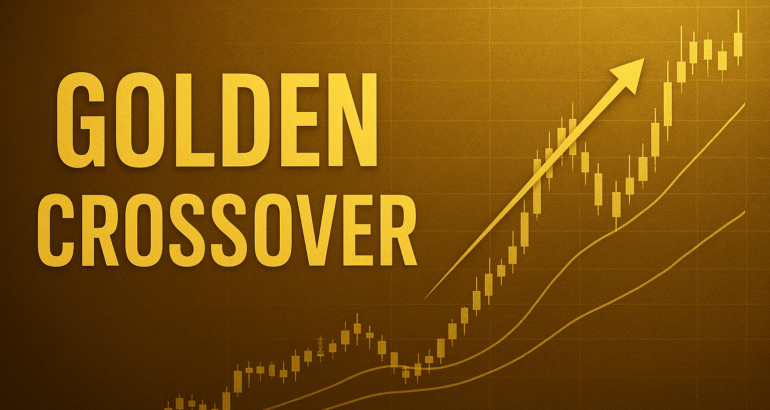
The Golden Crossover occurs when the 50-day average climbs above the 200-day average. This is the point where the short-term trend becomes stronger than the long-term trend.
Why Traders Respect the 50-200 Day Relationship
The relationship between the 50-day and 200-day averages is important because it reflects two different groups of traders. The 50-day captures swing traders and medium-term participants. The 200-day reflects institutions, funds, long-term investors, and pension managers. When the 50-day overtakes the 200-day, it signals a unifying shift in both groups. This alignment is rare and often creates powerful trends.
How the Golden Crossover Works
What the Crossover Represents
The Golden Crossover is not just a visual pattern. It represents a shift in the behavior of thousands of traders. Before the crossover forms, buyers must consistently outweigh sellers during the weeks leading up to it. This repeated pressure pulls the 50-day average upward. When it finally crosses the slower 200-day average, the shift becomes undeniable. Markets tend to respond with renewed confidence, which often leads to a self-reinforcing cycle of bullish momentum.
Why the Golden Crossover Often Predicts Bull Markets
Bull markets require strong demand and sustained buying. The Golden Crossover appears only when both are present. Because it is confirmed by weeks or months of consistent price movement, it has a way of catching the most durable market shifts. Historical data shows that many long-term rallies in the S&P 500, Nasdaq, gold, Bitcoin, and leading stocks began with this signal. Even though it forms after the rally starts, it often catches the heart of the long-term trend.
The Psychology Behind the Golden Crossover
How Crowd Behavior Drives the Signal
Market psychology is the real engine behind the Golden Crossover. Most traders react to price behavior, not predictions. When price rises steadily for several weeks, confidence spreads. Swing traders enter positions. Long-term investors return. Algorithmic trading systems turn bullish. All these factors push price higher until the 50-day average begins to reflect that strength. Once the 50-day crosses the 200-day, the crossover becomes a reference point for large numbers of traders. This shared belief creates a unified sense of direction that often fuels further buying.
Why It Becomes a Self-Strengthening Signal
The moment the Golden Crossover forms, it becomes a widely recognized event. Chart analysts discuss it. Trading channels highlight it. Automated systems trigger new positions. This increased attention often increases volume on the long side. As more traders act on the signal, the uptrend strengthens, making the crossover more reliable.
Historical Performance of the Golden Crossover
Key Examples in Stock Market History
The Golden Crossover has appeared during many important market moments. The long-term bull markets of the 1980s, 1990s, and 2010s frequently saw Golden Crossovers just before sustained rallies. Even during downturns, when a Golden Crossover reappeared, it often signaled a return to strength. While the signal does not work every time, history shows that it aligns with powerful trends more often than not.
Why the Signal Worked During Major Bull Runs
The reason for its success is that it confirms long-term accumulation. Most major market recoveries begin slowly. Traders hesitate at first. Then weeks of steady buying push the 50-day average up. When the 50-day crosses the 200-day, it shows that the recovery has depth. That depth attracts larger players and institutions, who often build positions once long-term trends stabilize.
How Traders Use the Golden Crossover Today
Use in Stock Trading
Stock traders often use the Golden Crossover as a confirmation of long-term trend direction. When the signal appears, it encourages investors to begin building positions gradually. Many traders use it as a sign to avoid short positions and focus on long setups. In large-cap stocks, the signal is particularly meaningful because institutions move slowly, and their behavior influences the 200-day average heavily.
Use in Crypto Trading
Crypto markets move faster, but the Golden Crossover remains relevant. Bitcoin and Ethereum have shown strong reactions to this signal during several major bullish cycles. Because crypto traders watch moving averages closely, the crossover often leads to sudden bursts of buying. The signal helps filter out false breakouts and highlights when momentum has true long-term potential.
Use in Forex and Commodities
In forex and commodities, the Golden Crossover works best on higher timeframes. Daily and weekly charts carry more weight. Because these markets respond to macro forces, the crossover helps traders see when long-term sentiment shifts due to fundamentals like interest rates, supply cycles, or geopolitical trends.
Trading Strategies Based on the Golden Crossover
Entry Strategy After the Crossover
Many traders enter immediately after the crossover. This is the simplest approach. The market has already built momentum, and the signal confirms that buyers are in control. Other traders wait for a small pullback after the crossover to enter at a better price. Both approaches have historically been effective depending on the asset.
Exit Strategy for Managing Trend Trades
The Golden Crossover is designed for long-term trading, so exits aim to capture the full trend. Many traders use the opposite of the Golden Crossover, known as the Death Cross, as an exit signal. When the 50-day falls below the 200-day, it signals that the trend is weakening. Other traders use trailing stops to exit when price reverses too strongly.
Risk Management Around the Crossover
Managing risk is critical. The Golden Crossover does not eliminate volatility. Traders often risk a small portion of their account per trade and diversify their entries. Using volatility tools like ATR can help set reasonable stop levels. The goal is to stay in the trend as long as possible without giving back significant profits.
Strengths and Weaknesses of the Golden Crossover
Strengths
The Golden Crossover filters out short-term noise. It focuses on long-term price action. It aligns well with institutional behavior and confirms sustained accumulation. Its simplicity makes it accessible for beginners, yet experienced traders respect it because it often aligns with major trend shifts.
Weaknesses
The signal is slow. It can lag, especially during fast-moving markets. Some crossovers happen during choppy periods and lead to false starts. Because it depends on long-term averages, it is not ideal for short-term traders. It works best when combined with other indicators or broader market context.
The Golden Crossover in Modern Algorithmic Trading
Why Algorithms Still Use the Signal
Even in a world dominated by automated systems, the Golden Crossover remains relevant. Many algorithms incorporate moving-average crossovers because they reflect real price behavior rather than predictions. Machines process data quickly, but they still rely on structural signals like the crossover to determine long-term direction.
How Smart Money Reacts to the Crossover
Institutional investors often anticipate the crossover before it appears. They recognize the buildup in price behavior and begin accumulating positions. When the crossover finally forms, the signal confirms what they already started. This explains why markets often accelerate after the crossover appears. It validates the early accumulation of professional traders.
Why the Golden Crossover Still Matters
The Golden Crossover has survived for decades because it reflects something timeless. Human behavior. When confidence builds for weeks, it eventually becomes visible in the moving averages. When the medium-term trend overtakes the long-term trend, it shows that the market has shifted in a real and measurable way.
In a world full of indicators and strategies, the Golden Crossover remains one of the simplest and most dependable ways to identify long-term strength. Traders who want clarity, structure, and confirmation still rely on it because it captures momentum in a way that aligns with how markets behave in the real world.